
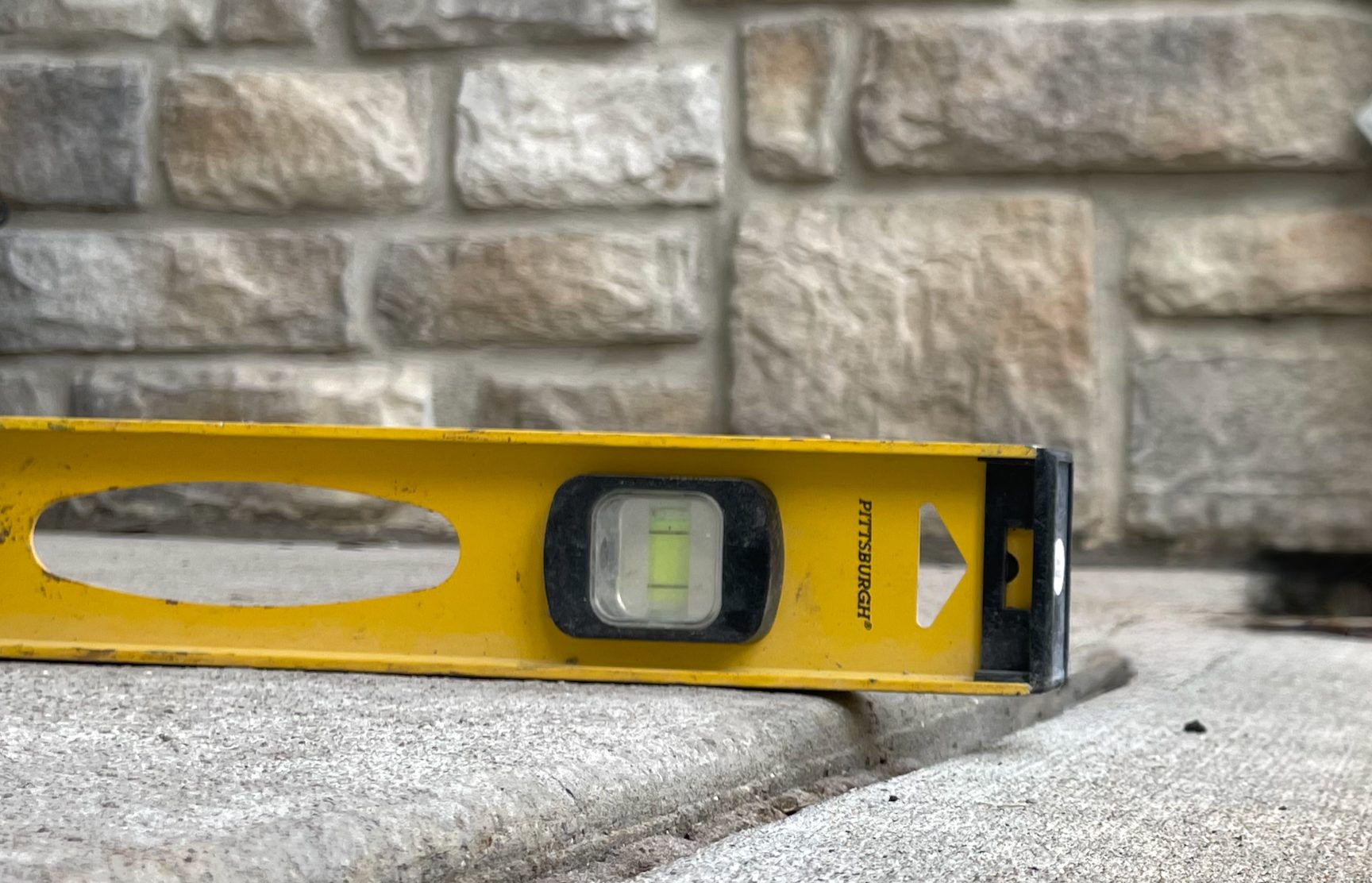
Mudjacking & Concrete Leveling in Omaha, NE
Sunken driveway, sidewalk, patio or front steps? We raise the concrete you already have by pumping a crushed-rock grout underneath it. It is an affordable concrete repair with no tear-out, at a fraction of the cost of new concrete.
- Free quotes
- 10-year warranty
- Mudjacking specialists
- Most jobs done in a day
Watch a sunken slab come back up
Mudjacking is simple to understand once you see it. We drill a few small holes, pump grout under the low side, and the slab rises back to where it was poured.
Most Omaha jobs take between an hour and one working day. You can walk on the concrete as soon as we finish.

Why Omaha homeowners choose mudjacking
Mudjacking is all we do. It has been raising concrete for decades, and for most driveways, walks and patios it is the best and most affordable lasting repair.
Real rock under your slab
Our grout is a crushed-rock mixture. It does not break down or shrink, so the slab has solid support again.
A fraction of replacement cost
Raising a slab typically costs one-half to one-third of tearing it out and pouring new concrete.
Adjustable down the road
If the soil moves again years from now, we can re-adjust the slab through the same holes.
Backed for 10 years
Our work carries a 10-year warranty against shrinkage or deterioration of the material.


Concrete we raise around Omaha
If it is a concrete slab and it has sunk, we can usually lift it. These are the jobs we do most.
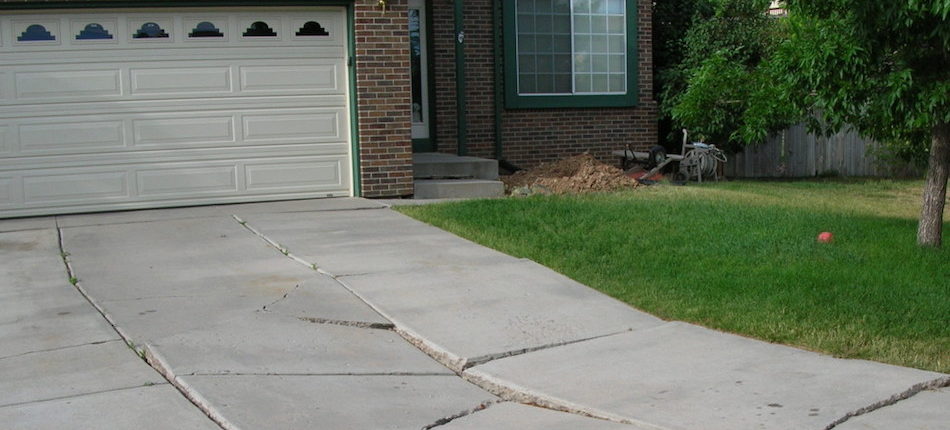 Driveways
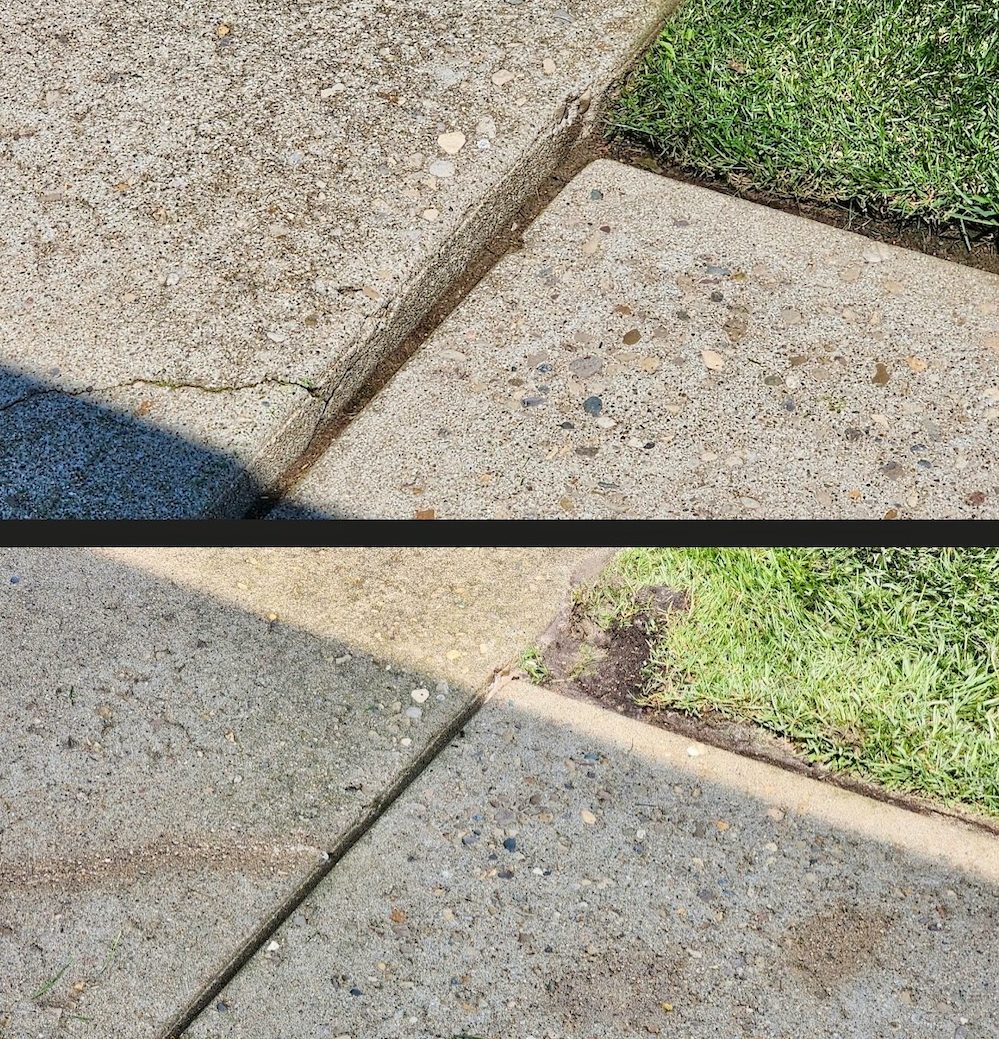 Sidewalks and trip hazards
 Patios
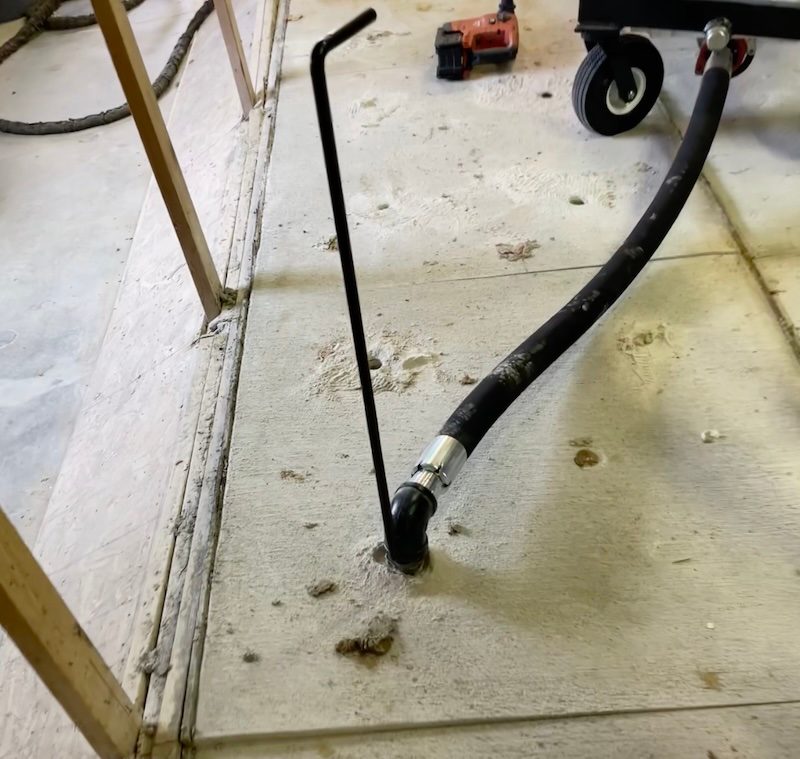 Garage and interior floors
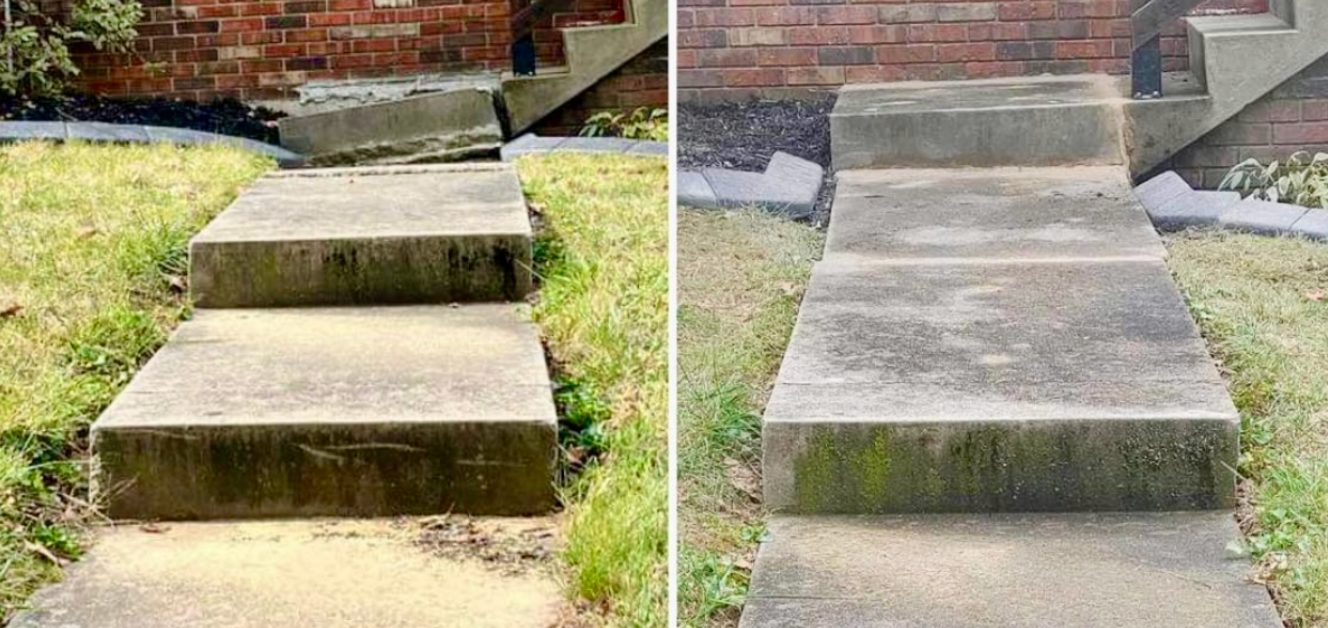 Steps, stoops and porches
 Commercial mudjacking
- Pool decks
- All residential work
Mudjacking, concrete lifting, slabjacking: the same job
Mudjacking goes by a lot of names. You will also hear concrete lifting, concrete raising, concrete leveling and slabjacking. They all describe the same repair: a contractor lifts a sunken slab back to level by filling the space underneath it.
Our company handles residential and commercial work across the Omaha metro. Most calls are for a settling driveway, an uneven walkway or sidewalk, a patio or porch that has pulled away from the house, or a garage floor that has dropped along one edge. We also raise interior concrete floors, including basement floors.
Mudjacking is also used for void filling, where grout is pumped into empty space under a slab before it starts sinking. That gives the concrete solid support again, which is sometimes called concrete stabilization. A cracked slab can usually still be lifted, as long as the pieces are large enough to move together.

How mudjacking works

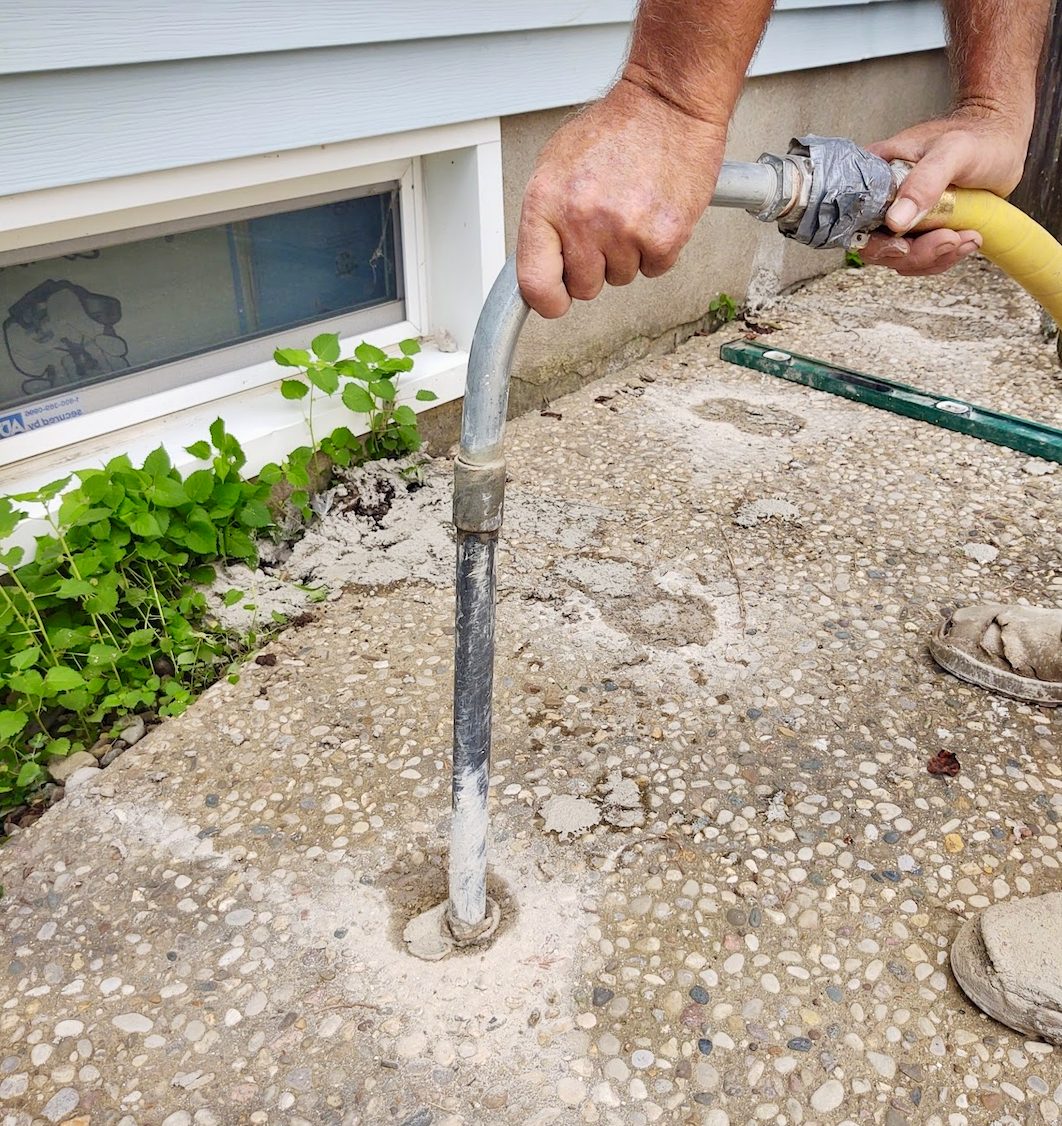
Drill
We drill a few holes, about one inch across, through the sunken slab.
Pump
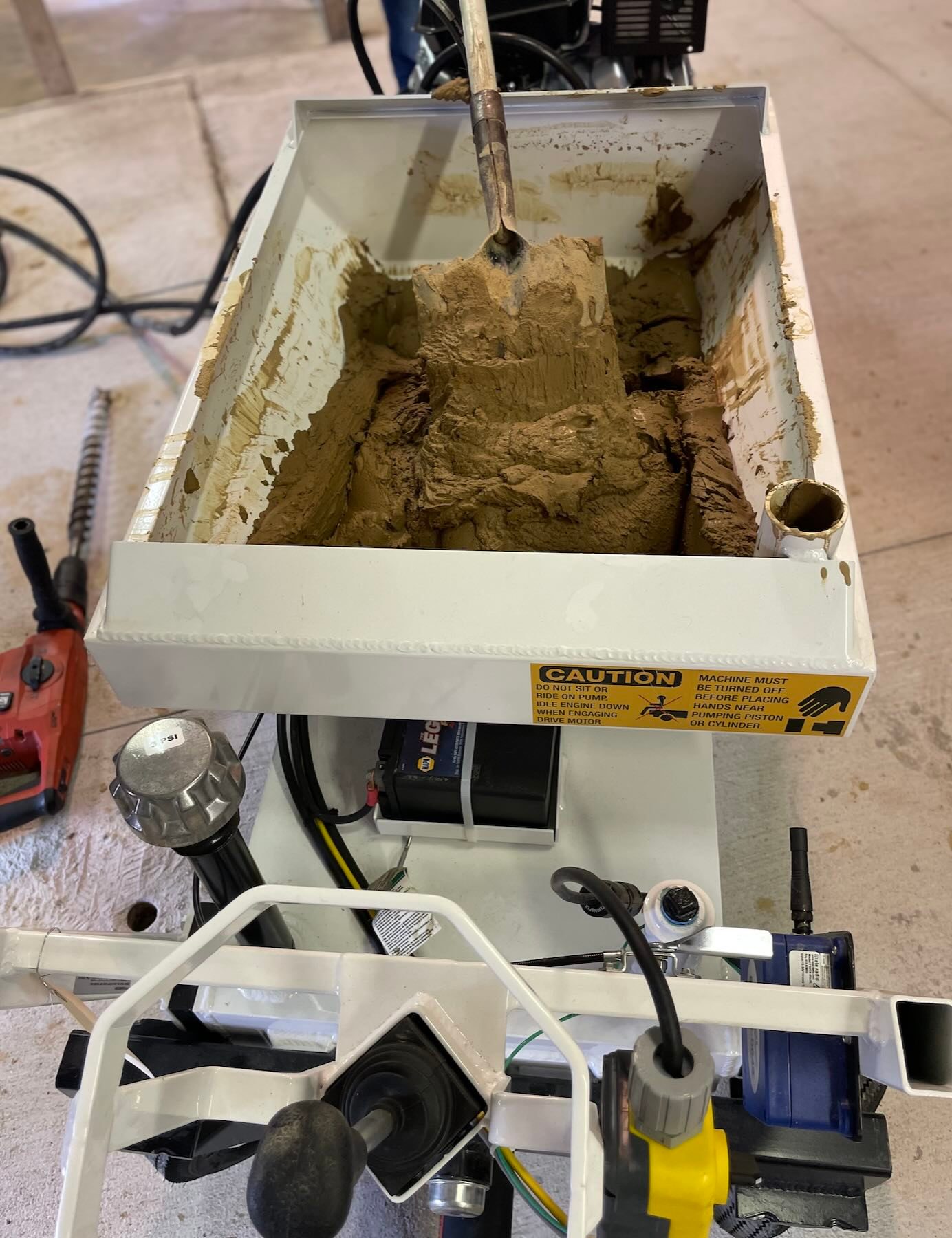
Grout is pumped under the slab. It fills the empty space, then pressure lifts the concrete to the right height.

Patch
We fill the holes with new concrete and clean up. The slab is ready to walk on.
Before and after
Sunken concrete, raised and level again.
BeforeAfter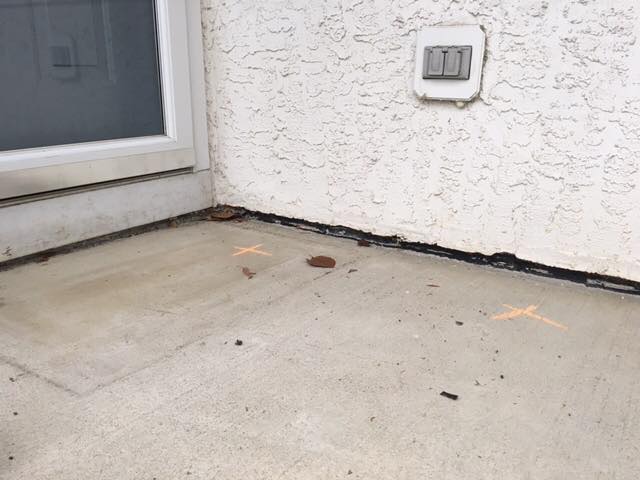 Before
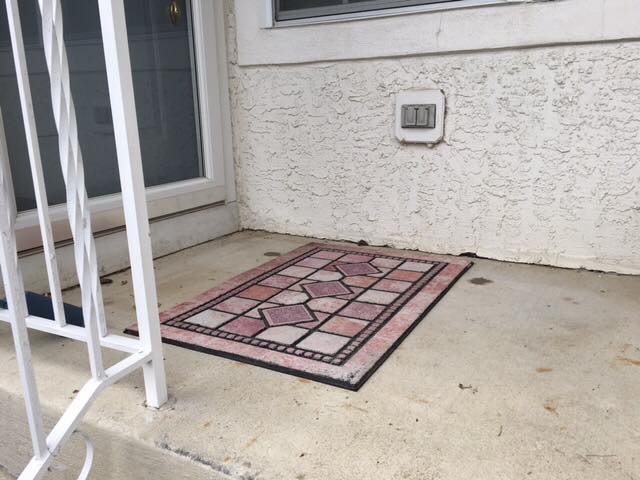 AfterBeforeAfter
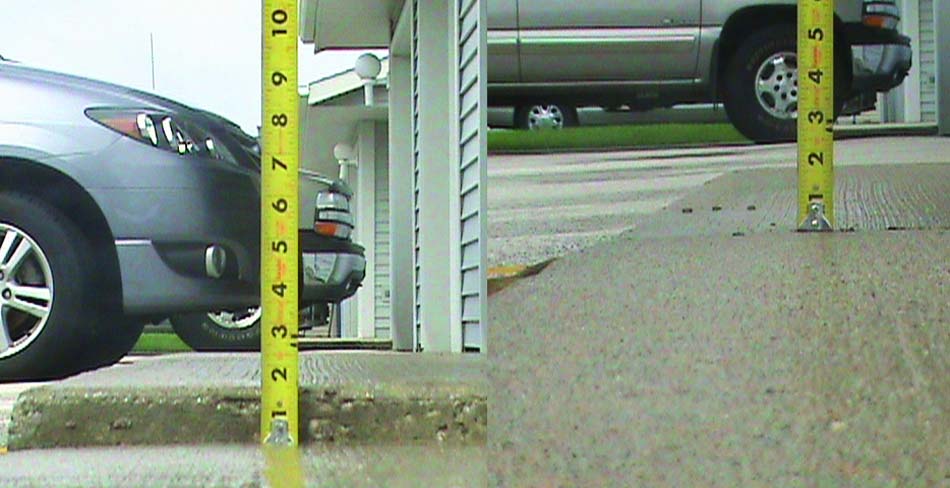 BeforeAfter
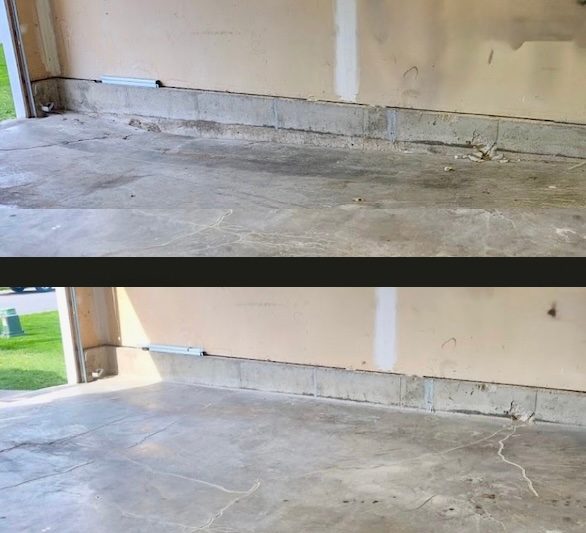 BeforeAfter
 Before
 After
Mudjacking on the job
One stamped concrete patio in Omaha, from sunken to level.


Mudjacking vs. polyjacking: why we stick with mudjacking
Polyjacking, also called foam leveling or polyurethane concrete lifting, raises a slab by injecting expanding foam under it. Mudjacking does the same job with a crushed-rock grout. Both work. Here is why we use mudjacking.
A longer track record
Mudjacking has been raising concrete since the 1930s, when road crews first used it to lift sunken highway slabs. Foam lifting came along decades later.
A lower price
The grout is made from ordinary, widely available material, so mudjacking usually costs less than foam for the same slab.
Solid fill under the slab
Grout is pumped in until the space under the concrete is full, so the slab rests on dense, heavy material.
Rock, not plastic
Our mix is crushed rock. No chemical foam goes into the ground next to your home.
Foam does have its place. It uses smaller holes and weighs less, which can help on very weak soil. For most Omaha driveways, walks, patios and garage floors, mudjacking does the same job for less.
Why concrete sinks in Omaha
Much of the Omaha area sits on loess, a fine wind-blown silt. It holds up well when dry, but it loses strength and compacts when water soaks into it.
Add our freeze-thaw winters, downspouts that empty next to a slab, and fill dirt that was never fully packed around newer homes, and the ground under a driveway or walk slowly settles. The concrete follows it down.
Mudjacking fills that space and puts the slab back on solid support. Our guide to common concrete problems covers how to keep it from happening again.
Mudjacking across the Omaha metro
We work within about 30 miles of Omaha, on both sides of the river. These are the communities we are in most often.
- Papillion
- La Vista
- Bellevue
- Elkhorn
- Gretna
- Millard
- Ralston
- Bennington
- Council Bluffs, IA
We also work in Boys Town, Waterloo, Valley, Yutan, Chalco, Springfield, Plattsmouth, Glenwood, Crescent, Missouri Valley, Fort Calhoun, Blair, Arlington, Ashland and Louisville.
Mudjacking questions we hear most
How much does mudjacking cost in Omaha?
Most jobs run from a few hundred dollars to a couple thousand, depending on the size of the slab and how far it has sunk. That is usually one-half to one-third the cost of replacement. Estimates are free.
How long does it take?
Most jobs take between an hour and one working day. You can walk on the slab right after we finish.
Do I need to be home?
Not for outdoor concrete such as driveways, walks and patios. We do need someone home for interior slabs.
Will it damage my yard?
Usually not. If the ground is very wet, our equipment can leave light surface marks.
Will the patched holes show?
The new concrete in each hole is lighter at first and darkens as it ages.
Is mudjacking the same as polyjacking or foam leveling?
No. Both raise sunken concrete, but they use different material. Polyjacking injects polyurethane foam. Mudjacking pumps a crushed-rock grout. We are a mudjacking company. The grout is heavy, stable material that fills the space under the slab, and it usually costs less than foam.
Can you lift cracked concrete?
Usually, yes. Cracks that are already in a slab will still be there after it is raised, and a lift can make a hairline crack easier to see. Mudjacking does not cause new cracks in sound concrete.
Will the slab settle again?
The grout does not shrink or break down, and our work carries a 10-year warranty. If the soil under it moves again, we can re-adjust the slab through the same holes.
How do I keep concrete from sinking again?
Keep water away from the slab. Extend downspouts, keep the soil sloped away from the house, and keep joints and cracks caulked. Joint sealing after a lift helps for the same reason.
Is mudjacking the same as soil stabilization?
Not exactly. Soil stabilization treats weak ground deep below a slab. Mudjacking fills the space directly under the concrete and lifts it. For most sunken driveways, walks and patios, that is the right fix.
Can concrete be lowered?
No. Mudjacking can only raise a slab. If tree roots have pushed a section up, the fix is to grind the high edge or raise the slabs next to it to match.
Is sunken concrete a sign of a foundation problem?
Usually not. Most of the time it is the soil under that one slab. A slab that tilts toward the house sends water at the foundation, though, so it is worth fixing early.
Get your free mudjacking quote
Tell us what has sunk and where. We will take a look and give you a free estimate, with no pressure.
Call or text any time.